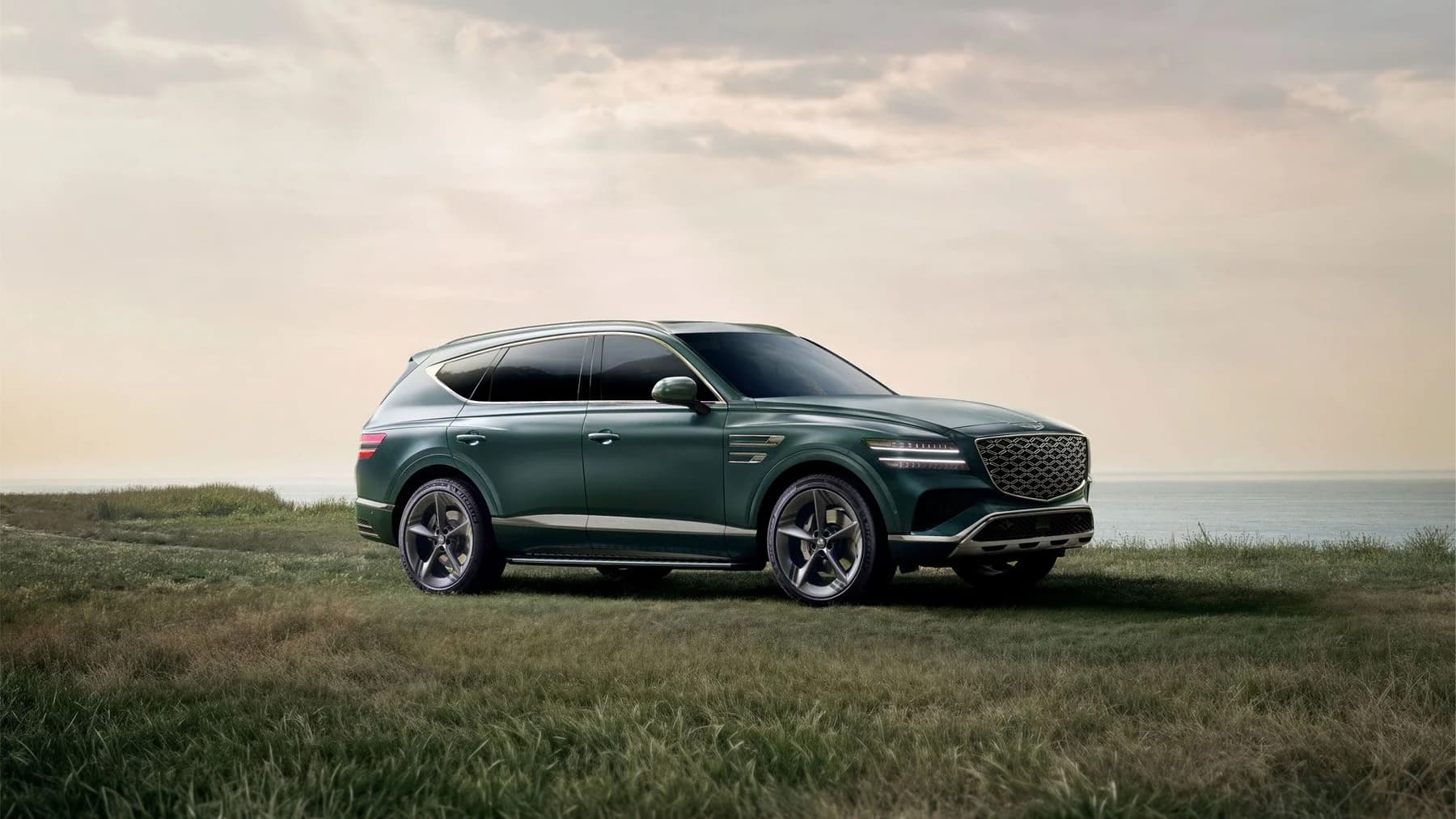

The most interesting thing about the Genesis GV80 Hybrid may be what it lets a luxury SUV stop doing: burning fuel and making engine noise through every slow-moving moment. The car is real, with a Korean launch behind it. For a U.S. buyer, the next question is whether the complete deal preserves its appeal.
A Korean launch, a U.S. plan, and a delivery date to verify
Genesis began Korean sales on October 6. Hyundai’s August 26 investor-day statement had targeted GV80 Hybrid sales in Korea and the United States during the second half of 2026. That is a dated corporate plan, rather than a confirmed arrival for your retailer or an individual order.
Our October 27 source review did not establish a firm U.S. hybrid delivery date, final U.S. model-year specification, hybrid MSRP or EPA rating. The U.S. GV80 page’s $58,850 starting MSRP describes the existing gasoline offering; it is not a GV80 Hybrid quote. Keep those stages separate before paying a deposit.
The engineering is aimed at the everyday drive
The 2.5-liter turbo system uses a starter-generator motor, called P1, and a propulsion/regeneration motor, P2, in a parallel arrangement. Genesis pairs it with a new seven-speed transmission. Its published combined output is 352 PS; that metric-horsepower figure is not a separately certified U.S. horsepower specification.
Liquid battery cooling and broader motor operation are intended to support refinement as well as efficiency. A useful test drive would emphasize a cold start, a parking maneuver and the transition from gentle acceleration to a firm throttle request. Those moments will tell a luxury buyer more than repeating a maximum-output number.
The numbers, and how sure we are
Korean-market figures and dated manufacturer plans; not U.S. EPA certification, an independent road test or a retailer delivery commitment. Source review: October 27, 2026.
| Item | What we know | Status | Source |
|---|---|---|---|
| Hybrid architecture | 2.5-liter turbo; P1 starter-generator and P2 drive motor; seven-speed transmission | Genesis’s claim | Genesis: August 13 hybrid-system engineering announcement |
| Combined output | 352 PSManufacturer metric-horsepower figure; do not relabel as a final U.S. hp specification. | Genesis’s claim | Genesis: August 13 hybrid-system engineering announcement |
| Korean combined efficiency | 12 km/L; approximately 29% gainOctober release: 19-inch wheels, 2WD, five seats; not an EPA result. | Genesis’s claim | Hyundai Motor Group: October 6 Korean GV80 Hybrid launch |
| Dated U.S. sales target | Second half of 2026August 26 corporate plan; exact retailer delivery date still to verify. | Genesis’s claim | Hyundai Motor Group: August 26 investor-day plan |
| U.S. hybrid MSRP / EPA rating | Not established by the sources reviewed | Not announced | Not published |
| Representative U.S. dealer premium | No verified market-wide figureNo signed hybrid quote or representative transaction sample obtained. | Not announced | Not published |
The launch has more than one date
Hybrid engineering detailed. Manufacturer internal-test efficiency claim, for the stated configuration. Genesis: August 13 hybrid-system engineering announcement
Korea and U.S. included in second-half-2026 sales plan. A dated plan, not a promised delivery to an individual buyer. Hyundai Motor Group: August 26 investor-day plan
Korean sales launch announced. Hyundai Motor Group: October 6 Korean GV80 Hybrid launch
New Genesis feature explains the hybrid experience. Page dated October21; body dateline October20. Genesis: October 21 hybrid feature
An efficiency gain still needs the right test label
The October Korean release reports 12 km/L combined and about 29 percent better efficiency than the gasoline 2.5T, for the 19-inch-wheel, 2WD, five-seat configuration. The earlier August announcement described an internal-test gain of approximately 25 percent or more. They are dated statements with their own contexts.
Neither establishes a U.S. EPA result. Converting kilometers per liter into miles per gallon changes the unit; it does not change the test procedure. Compare the eventual U.S. labels for the wheel, drivetrain and seating configuration you would actually buy. Until then, avoid building a savings promise around an imported headline.
Luxury is the more persuasive reason to hybridize
This is a conventional hybrid with no external charging routine. Genesis describes Stay Mode for using cabin comfort systems while parked, predictive battery management and regenerative braking that adapts to driving information. The new grille, wheels and cabin color combinations give it visual distinctions without abandoning the GV80 shape.
Our take: quiet departures and smooth power delivery fit this vehicle’s character better than an attempt to turn it into a drag-strip special. Check how the brakes feel as the vehicle slows, how naturally the engine joins in, and whether the cabin remains calm on your usual roads. We have not driven it.
An appealing launch is not yet a measured shortage
A luxury hybrid that avoids a charging commitment has a credible audience. Strong interest is our expectation, not an established U.S. order book: the reviewed sources do not establish U.S. hybrid order totals, initial retailer allocations or a representative dealer premium. We have not obtained a signed U.S. hybrid quote.
Treat a claim that every buyer must pay extra as something to check. Ask which actual vehicle or allocation the offer covers, what price is being held, and when the promised arrival was last confirmed. Compare written offers from several retailers. A short supply of one color at one store does not establish a national shortage.
A launch premium can spend the fuel savings first
Here is an illustration, not a GV80 forecast. At 12,000 miles a year and $4 per gallon, a hypothetical move from 20 to 25 mpg cuts annual fuel spending from $2,400 to $1,920: a $480 saving. A $5,000 dealer premium alone would consume about 10.4 years of that saving.
That calculation excludes any factory hybrid price difference, financing, taxes, maintenance and resale value. Your actual miles, fuel price and final EPA ratings may produce a very different result. Efficiency can be valuable; it does not automatically make an expensive launch deal economical. Pay for benefits you will use, with the total cost visible.
Get the price before negotiating the payment
Start with the exact vehicle’s factory window-sticker total, including factory options and destination. Ask for a written out-the-door quote identifying the selling price, any market adjustment, each dealer-added product or fee, and taxes, title and registration. Compare the same configuration and registration assumptions. The FTC recommends getting that total in writing before visiting.
Read beyond the line labeled markup. A quote can show no market adjustment and still add products you did not choose. Ask for the price without unwanted additions, and keep a trade-in or monthly-payment discussion from obscuring the new vehicle’s total. This is a buying strategy, not a claim that every additional charge is unlawful.
Before a reservation payment, get written answers about which circumstances allow a refund, whether the price can change, how the allocation is identified and what happens if delivery slips. Do not substitute a salesperson’s assurance for the terms you will sign. A waiting-list position, an allocation and a vehicle available to collect are different promises.
Our take: the hybrid deserves attention; the quote deserves patience
The engineering gives the GV80 a convincing new direction. For a buyer who values a quieter daily drive, that may matter as much as fuel consumption. Let the U.S. specification and a complete written offer finish the case. A desirable new powertrain does not make a dealer premium part of its engineering.
Your questions, answered
Does it need to be plugged in?
No. Genesis describes a conventional hybrid, using its engine and regenerative braking to replenish the battery. Do not confuse it with a plug-in hybrid, a separate EREV plan or the Coupe’s 48V e-supercharger label.
Is the U.S. GV80 starting price the hybrid price?
No hybrid MSRP was established in the reviewed U.S. sources. The current gasoline GV80 starting price is not a substitute. Compare the eventual hybrid window sticker and the retailer’s complete written quote.
Should I pay extra because it will be hard to find?
Treat that as a claim to verify with the specific allocation and several written offers. We have not established a representative U.S. shortage or markup. Decide your own ceiling before a deposit, with refund and price-change terms in writing.
Verify the U.S. hybrid specification, compare complete written offers and review deposit terms. Strong interest is a forecast; a dealer premium needs evidence.
Sources
- Manufacturer announcement; August 13, 2026; internal test claimsGenesis: August 13 hybrid-system engineering announcement
- Manufacturer Korean-market launch; October 6, 2026Hyundai Motor Group: October 6 Korean GV80 Hybrid launch
- Manufacturer feature; page dated October 21, body dateline October 20, 2026Genesis: October 21 hybrid feature
- Dated manufacturer market plan; August 26, 2026Hyundai Motor Group: August 26 investor-day plan
- Current U.S. product page checked October 27; not a hybrid price announcementGenesis USA: current GV80 product page
- Consumer guidance; checked October 27, 2026FTC: car dealer ads and written out-the-door prices
Reported by DrivrShield Briefing. Published October 27, 2026; last updated October 27, 2026. Facts can develop after publication: open a source for its latest status. How we report.